


Why use a relay in a PCB?
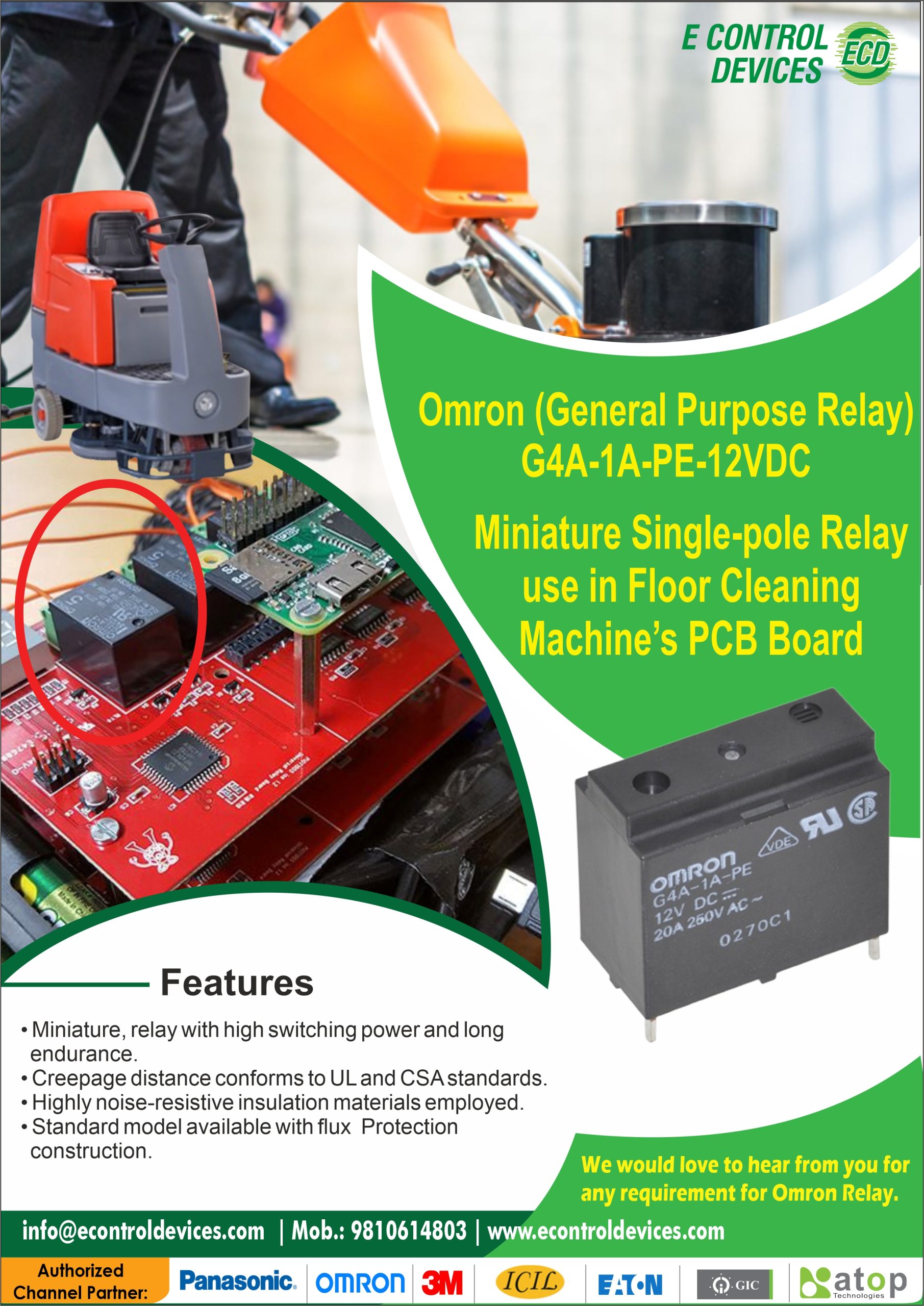
What is the latest relay technology for floor cleaning scrub machines?
Relays aren't restricted to reworking single inputs into single outputs at single factors in the circuit. These work differently based on the different technologies; a single relay can prompt a couple of circuits that are based on a different type of technology, and on the other hand, another technology-based relay will activate a single circuit. Similarly, relays may be utilised in a mixture with each other to carry out the Boolean logical functions. This is helpful and viable to use different components; this can be the best cost-effective type of relay. For example, let’s take the G4A-1A-PE 12 VDC Omron relay, which is used for heavy machinery. It is used for PCB boards in-floor cleaning machines or floor cleaning scrub machines. It is the most compact relay with this kind of amperage with a universal terminal footprint. It can withstand the high dielectric conditions for transient protection, 10000V surge in µs between coil and contact. The unique relays consist of far superior features to most of the digital components.How does the relay work?
Relays switch indicators through mechanical action. The common working principle for most of the relays is similar. You can find the common technical workings of relays below in steps:- First, the electric signal is carried to the terminals of the relay.
- Then the current travels through the drift to the magnet.
- This current will magnetise the core of the relay.
- The magnetised coil will react with the armature that will be drawn to the core of the relay.
- When the armature is drawn to the core, the shifting contacts and the current are transferred to the weight that is linked to the output contacts.
- After the current to the coil is decreased, the pressure is lost, and the pressure of the discharge spring returns the armature to its original position.
- When the armature returns to its initial function, the contacts will separate.


