



Challenges Addressed by D6T MEMS Thermal Sensors:
- Size and Precision: Traditional sensors often grapple with the trade-off between size and precision. The integration of thermopile elements and Application-Specific Integrated Circuits (ASICs) within a single MEMS package conquers this challenge. The result? An ultra-compact footprint coupled with unparalleled precision.
- Signal-to-Noise Ratio (SNR): Achieving stability in temperature output is paramount, especially in applications like fever detection. The D6T MEMS Thermal Sensors boast the world's highest signal-to-noise ratio (SNR), ensuring temperature output stability with an impressive ±1.5°C accuracy. For heightened precision, users can leverage 2-point calibration, pushing the accuracy envelope to ±0.1°C.
- Flexibility in Design: Conventional sensors often limit design flexibility due to rigid surface mount types. Omron has disrupted this norm with its D6T sensors, presenting a "plug and play" solution. Equipped with a connector and cable, these sensors empower users to embrace a flexible design approach, unshackling them from the constraints of surface mount configurations.
- Ease of Implementation: The complexity of microcontrollers can be a stumbling block in sensor integration. Omron addresses this challenge by embedding software in the PCB module type of D6T sensors. This ingenious addition converts signals to digital temperature output seamlessly, simplifying the implementation of microcontrollers. The result is a quick and hassle-free installation, making the sensors ready for use almost instantly.
Best Offer Available
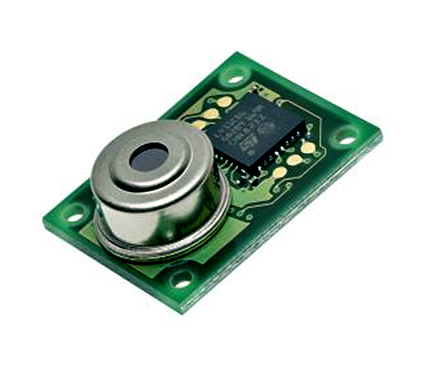
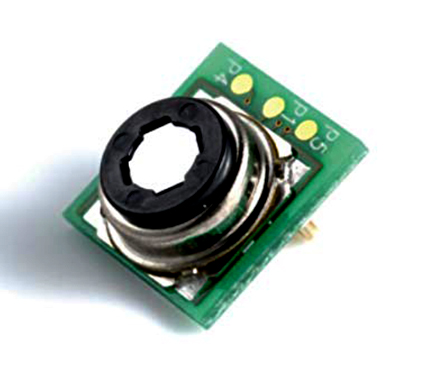
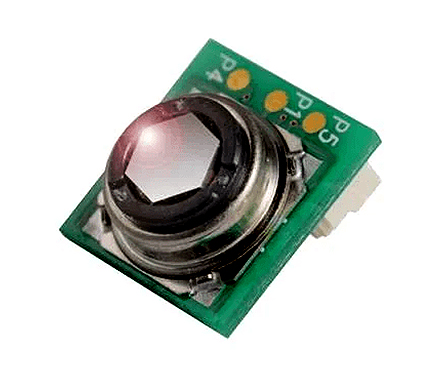
Benefits Galore:
- Low NETD through ASIC and MEMS Combination: The fusion of ASIC and MEMS technology in D6T sensors achieves a low Noise Equivalent Temperature Difference (NETD). This technological synergy enhances the sensitivity of the sensors, ensuring accurate temperature measurements even in challenging environments.
- Direct Temperature Value Output: Omron's commitment to user convenience shines through with the direct temperature value output feature. This not only streamlines software design but also makes the sensors more user-friendly. With a straightforward temperature value output, integrating these sensors into existing systems becomes a breeze.
- Versatility in Configuration: The D6T sensor series offers unparalleled versatility. Users can choose from a range of configurations, including variations in the number of elements (1 to 1024) and an extensive temperature range (-40 to 200°C). This flexibility ensures that the sensors cater to diverse application needs across industries.
- Matrix Type for Fever Detection: Omron recommends the matrix type 4x4 for fever detection, emphasizing the strategic use of these sensors in healthcare applications. The matrix configuration enhances the effectiveness of temperature monitoring, showcasing the adaptability of D6T sensors in critical scenarios.
- "Plug and Play" Design: The integration of a connector and cable transforms D6T sensors into a "plug and play" solution. This design choice not only simplifies the installation process but also opens doors for creative and adaptable sensor deployment in various environments.


