


Best Offer Available
How do PIR sensors work?
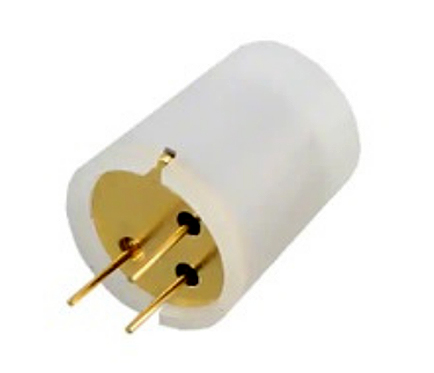
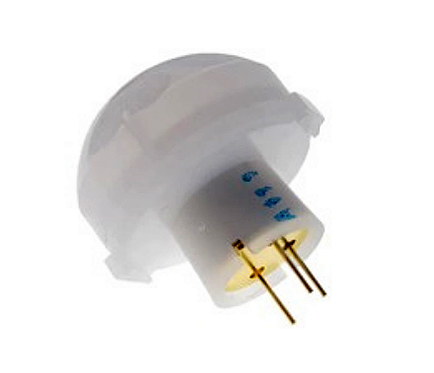
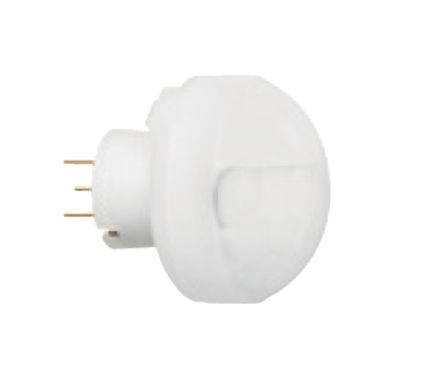
Passive infrared (PIR) sensors are very common to be used as motion detectors. The accurate readings and output of the sensor are based on some aspects like the distance between the sensor module and the object that is being detected. The motion detection sensors working on PIR technology are not as complicated to understand as it is widely regarded. It works in a very simple and easy way in comparison to other motion-detecting sensors. Some variables impact the input of the sensor which also affects the output or reading. It has two primary slots and each one of them is made out of very sensitive material. This material is sensitive to infrared waves also the lenses that are used are not just ordinary lenses. These are special Fresnel lenses. These come in dome-like shapes making them have a larger field of vision. The Panasonic PIR motion sensor comes with optics and its lens is just some sort of plastic that is fixed and costs very less. Also, the type of lens used is Fresnel and it can change the range and sensing pattern along with the breadth of the sensor. The dome-like shape of the lens helps in enlarging the field of vision, the bigger area is condensed into a smaller version and a larger detection area can be set up.Types of PIR sensors for human detection:
As the PIR sensors have a very simple working method or technology, there are 2 common types: The first one on this list is the thermal infrared sensor, which uses infrared for detection, and the sensitivity of the sensor is not based on the wavelength, this makes this type much slower in detection and its response to the detected object. The second is the quantum infrared sensor; it is a highly sensitive type of PIR sensor for human detection. It uses photons for the detection and the strength of the wavelength does make an impact on the rate of detection. This sensor is quite faster than the previous one but the only drawback is its temperature while detecting. It needs intermittent cooling time for accurate and precise detection.What are the components of a Panasonic PIR motion sensor?
The Panasonic PIR sensors use all the essential electrical components circuit, resistor, and capacitor. The basic pyroelectric component it uses is the amalgamation of metals and crystals. A silicone opening is provided for radiation and wavelength to pass through the metal sheet enclosing that is used for protection.What Is the Range of the PIR sensor for human detection?
This can be classified into various categories considering the wide range of applications. We are categorizing the range of detection into 4 classes based on the detection range for the application it is used in.Indoor application
The distance range for applications or devices that are used indoors or in smaller areas goes from 25 cm to 20 m. this range is most commonly found in home appliances and some other smaller applications.Outdoor applications
The outdoor applications have a larger detection area and need the detection range to start from at least 10 meters to 150 meters. Such a huge detection range is needed due to the applications like security cameras and surveillance systems.Are PIR sensors and motion detectors the same?
The Panasonic PIR motion sensor is not similar or equivalent to a motion detector. The two are quite different in their workings but sometimes people confuse each other and mix them. The PIR sensors are used in several everyday applications to monitor activity but the motion sensors are used only in some of the very specific areas that need to determine the human presence or absence only. The PIR sensor for human detection is very simple and small in comparison to the motion detectors. The PIRs also are very small and can easily be integrated with everyday devices and gadgets. Another benefit over any other sensor is its low power consumption. This is one of the best features that make it feasible to be used in several applications without raising the cost.Some Advantages are:
- The PIR motion sensors deliver impeccable results, these are highly reliable and provide great accuracy.
- It can detect small and slow-moving objects even in the dark vicinity; it doesn’t require lights to detect due to its working based on infrared wavelengths.
- The PIR sensor for human detection is completely contactless and works remotely. There is no need for the object to be in physical contact with the sensor, this kind of eliminates the purpose.
- The little energy consumption is another advantage over other types of motion detectors. It helps to save cost and power at the same time.
- These work remotely and can easily be connected to a monitoring or alarm system. Automation enables independent working without human interference


