
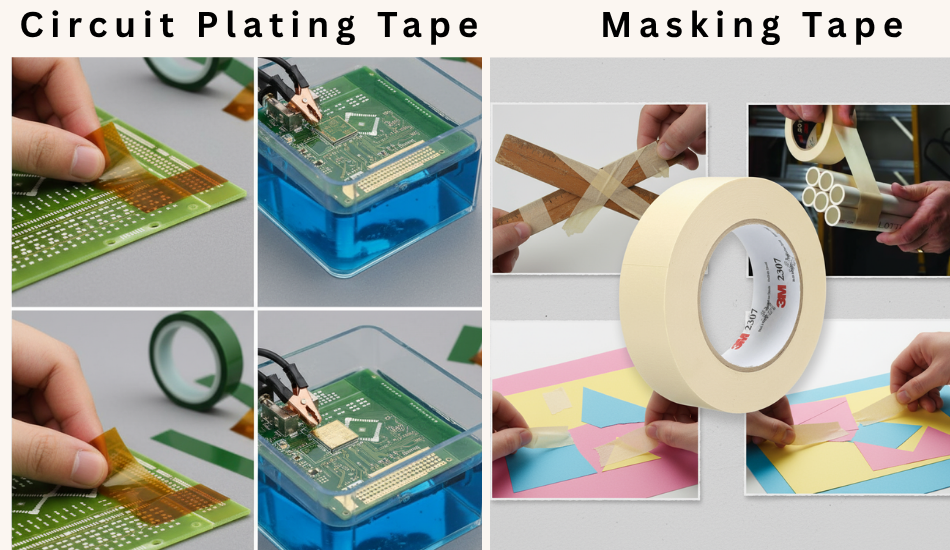
Adhesive tapes are part of our everyday life. We use them at home for small fixes, in offices for packaging, and in industries for large-scale production. But not all tapes are the same. Choosing the right tape can make a huge difference in quality, durability, and safety.
Circuit Plating Tape (CPT) and regular masking tape may look similar, but they are designed for very different purposes. CPT is designed for electronics and industrial tasks, particularly for high-precision work such as PCB assembly and soldering. Masking tape, on the other hand, is made for everyday tasks such as painting, crafts, or temporary holding.
Using the wrong tape in sensitive or high-temperature tasks can cause problems like melted adhesive, damaged circuits, or product defects.
This blog will explain the differences between CPT and masking tape, their uses, benefits, and when to choose each one.
By the end, you’ll understand why industries rely on CPT for electronics and why masking tape remains useful for household tasks.
Understanding Circuit Plating Tape
Circuit Plating Tape is a high-performance adhesive tape used in electronics manufacturing. It is designed to handle heat, chemicals, and sensitive components, making it essential for professional PCB assembly and repair work.
Core Properties of CPT:
- Heat Resistance: Can withstand soldering temperatures without melting or losing adhesion.
- Chemical Resistance: Resistant to flux, solvents, and plating chemicals used in electronics.
- Residue-Free Removal: Leaves no sticky residue behind, protecting circuits and components.
- Precision Adhesion: Provides exact coverage on metals, circuits, and sensitive surfaces without causing damage.
Common Applications:
- PCB manufacturing and repair
- LED assembly
- Battery packs
- Automotive electronics
- Aerospace electronic components
CPT is widely used in electronics, automotive, and aerospace industries because it ensures safety, precision, and reliability. It allows engineers to mask areas accurately, preventing defects and reducing rework in production lines.
Understanding Regular Masking Tape
Masking tape is a general-purpose adhesive tape that is widely used at home, in schools, and in workshops. It is inexpensive, easy to apply, and can be torn by hand, making it convenient for many everyday tasks.
Properties of Masking Tape:
- Affordable and easily available
- Easy to tear and apply
- Limited resistance to heat and chemicals
- Leaves residue if left for a long time
Typical Uses:
- Painting edges and surfaces
- Craft projects
- Temporary holding or bundling
- Packaging
Masking tape works well for light-duty, low-temperature tasks. However, it is not suitable for electronics, high-temperature processes, or industrial applications where precision and durability are critical.
Key Differences Between Circuit Plating Tape and Masking Tape
Material and Manufacturing
CPT is made from strong polymers or polyester backed with a heat-resistant adhesive. This design allows it to withstand high temperatures, resist chemicals, and provide strong, precise adhesion. Masking tape usually has a paper or thin crepe backing with a standard adhesive, which makes it less durable and not suitable for high-stress tasks.
Temperature Resistance
CPT can handle the heat generated during soldering or plating without breaking down. Masking tape, however, melts or loses its stickiness under high heat, which can ruin electronics or assembly work.
Adhesion Strength and Precision
CPT has controlled adhesion, which is strong enough to hold surfaces securely but easy to remove without damage. Masking tape’s adhesion is weaker and can peel off during high-precision tasks, leaving behind sticky residue that can damage circuits.
Chemical Resistance
CPT resists flux, soldering chemicals, and solvents used in electronic assembly. Masking tape easily gets damaged by these chemicals, making it unsafe for industrial or electronics work.
Flexibility and Surface Conformability
CPT can bend and stick to curved surfaces, corners, and irregular shapes. This makes it perfect for PCBs, battery packs, and small electronic components. Masking tape is less flexible and struggles to stick properly to uneven or curved surfaces.
Residue-Free Removal
CPT is designed to remove cleanly without leaving any adhesive behind. Masking tape may leave sticky residue, which can interfere with sensitive circuits or create cleaning problems.
Industrial vs. Household Use
CPT is essential in electronics, automotive electronics, aerospace, battery packs, and LED production. Masking tape is suitable for painting, crafts, temporary fixes, and packaging. Using masking tape in industrial or electronics applications can lead to defects and rework.
Storage and Shelf Life
CPT needs controlled storage to maintain its performance over years. Masking tape has a shorter shelf life and loses adhesion quickly when exposed to heat or humidity.
Cost Comparison
CPT is more expensive than masking tape. However, it provides long-term value by preventing errors, protecting sensitive components, and reducing rework. Masking tape is cheap but may cause extra costs if used inappropriately for electronics or high-precision tasks.
From a ROI perspective, CPT is a smart investment for industrial and electronic manufacturing because it reduces defects, saves labor, and ensures product quality.
Safety and Reliability
CPT ensures critical electrical safety by preventing short circuits, chemical contamination, and component damage. Masking tape is generally safe for household use, but it should not be relied upon for industrial electronics or high-temperature applications. Choosing the right tape can prevent accidents and product failures.
When to Choose Circuit Plating Tape vs. Regular Masking Tape
Use Circuit Plating Tape:
- PCB soldering and assembly
- High-temperature or chemical exposure
- Precision masking in electronics or battery packs
- Industrial and aerospace electronics
Use Masking Tape:
- Painting and surface protection
- Craft projects
- Temporary indoor use
- Packaging and bundling
Practical Example: CPT is ideal for masking small areas on an LED board before soldering, while masking tape is perfect for painting the edges of walls at home.
Benefits of Circuit Plating Tape
- Handles heat, chemicals, and harsh industrial environments
- Strong, precise adhesion without damaging surfaces
- Flexible and adaptable to curved or irregular surfaces
- Leaves no residue after removal
- Reduces defects, rework, and production delays
- Essential for electronics, automotive, and aerospace industries
Additional Considerations for Industrial Use
Choosing the right tape impacts production quality, efficiency, and safety. CPT complies with industrial standards for electronics and ensures consistent performance. Using masking tape instead of CPT in industrial settings can lead to poor adhesion, residue problems, circuit failures, and increased downtime. Proper tape selection ensures smoother production, higher yield, and safer end products.
Conclusion
Circuit Plating Tape and masking tape serve different purposes. CPT is built for electronics and industrial use, offering heat resistance, chemical durability, precise adhesion, flexibility, and residue-free removal. Masking tape is useful for household tasks like painting, crafts, and temporary fixes.
Using the right tape ensures product quality, reduces rework, and keeps electronics safe. For high-precision and industrial applications, Circuit Plating Tape is the reliable choice, while masking tape remains a handy solution for everyday tasks.